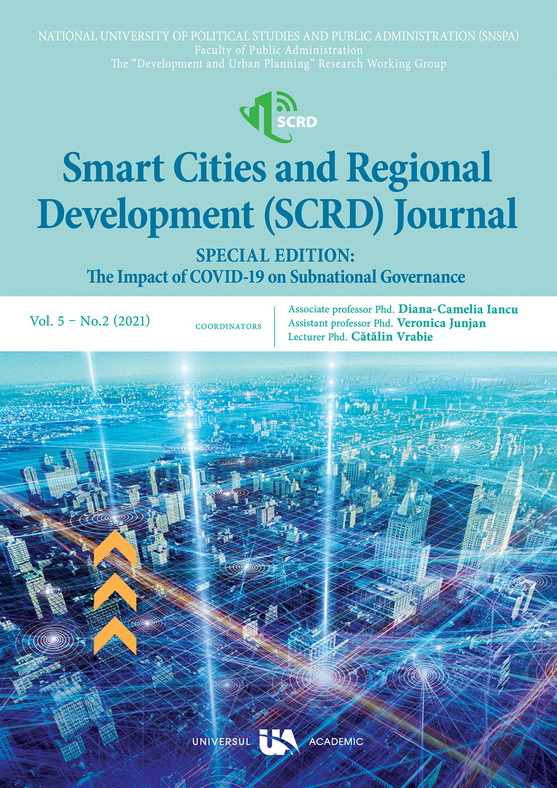
Editorial: The Impact of COVID-19 on Subnational Governance
DOI:
https://doi.org/10.25019/twjk5h23Keywords:
COVID-19 pandemic, public policy response, local governance, smart cities, urban and regional resilienceAbstract
The COVID-19 pandemic triggered an unprecedented surge of research across disciplines, as scholars sought to understand the virus, develop technological responses, and support governments in designing effective policy measures. This context renewed attention to the relationship between scientific knowledge and public decision-making, highlighting the critical role of research in informing policy during times of crisis. While early analyses focused primarily on national government responses, increasing attention was later directed toward the capacities of local and regional administrations, whose responsibilities in coordinating health, financial, and administrative actions proved essential in managing the pandemic’s complex and uneven impacts. The crisis also exposed significant regional inequalities and vulnerabilities, particularly affecting marginalized populations such as persons with disabilities, migrants, and detainees. Responding to these challenges, the contributions in this special issue examine local and territorial responses from diverse geographical contexts, exploring governance capacity, urban planning strategies, digital policy tools such as contact-tracing applications, and the implications of the pandemic for future residential design and urban development. Collectively, these studies provide insights into how interdisciplinary research and localized policy approaches can strengthen societal resilience in the face of global health crises.
Downloads
Published
Issue
Section
License
Copyright (c) 2021 Veronica JUNJAN

This work is licensed under a Creative Commons Attribution-NonCommercial-NoDerivatives 4.0 International License.